
What is a U Visa Psychological Evaluation?
U-Visa Psychological Evaluation is a mental health assessment provided by mental health professionals for an individual seeking U-Visa immigration benefits. It outlines the psychological, emotional and behavioral impacts that may have resulted from the qualifying crime.
During a U-Visa Psychological Evaluation, an assessment with a licensed mental health professional might involve conversations about personal history, experiences during and related to the offense, emotional symptoms, functional impairment, and other aspects of life. The purpose of this discussion is not just to describe what happened, but also to explain how the incident impacted the person emotionally and psychologically.
A psychological evaluation can also help present complicated emotional experiences in a clear and organized way that may be useful when reviewing an immigration case.
When do you Need a U-Visa Psychological Evaluation?
Not every U-Visa applicant will have exactly the same circumstances. For the applicant who has been personally affected through the trauma of witnessing the crime, a psychological assessment may be beneficial.
For example, an evaluation may be considered when someone has experienced:
- Anxiety, fear, or constant worry
- Depression or persistent sadness
- Sleep difficulties or nightmares
- Emotional distress when remembering the incident
- Changes in relationships or social activities
- Loss of confidence or feelings of helplessness
- Trauma-related symptoms
- Problems managing everyday responsibilities
The evaluation can explain the connection between the applicant’s experiences and their current psychological condition. It may also provide professional documentation of symptoms that might not be obvious from other evidence.
How can Psychological Evaluations for U-Visa cases help?
Psychological evaluations for U-Visa cases can help document the emotional consequences of a traumatic experience in a structured and professional manner. People who have experienced a serious crime may find it difficult how they feel when discussing events that can be painful, scary, or traumatic. A therapist offers a space where an applicant feels secure to tell the story from his/her perspective.
The evaluation may include information about the applicant’s symptoms, emotional functioning, relevant history, and the ways these difficulties affect everyday life. When appropriate, the professional may also explain how the reported symptoms are consistent with the experiences described by the applicant.
This type of documentation can give an immigration case a clearer picture of the person behind the application and the impact the crime has had on their life.
What happens during the Evaluation?
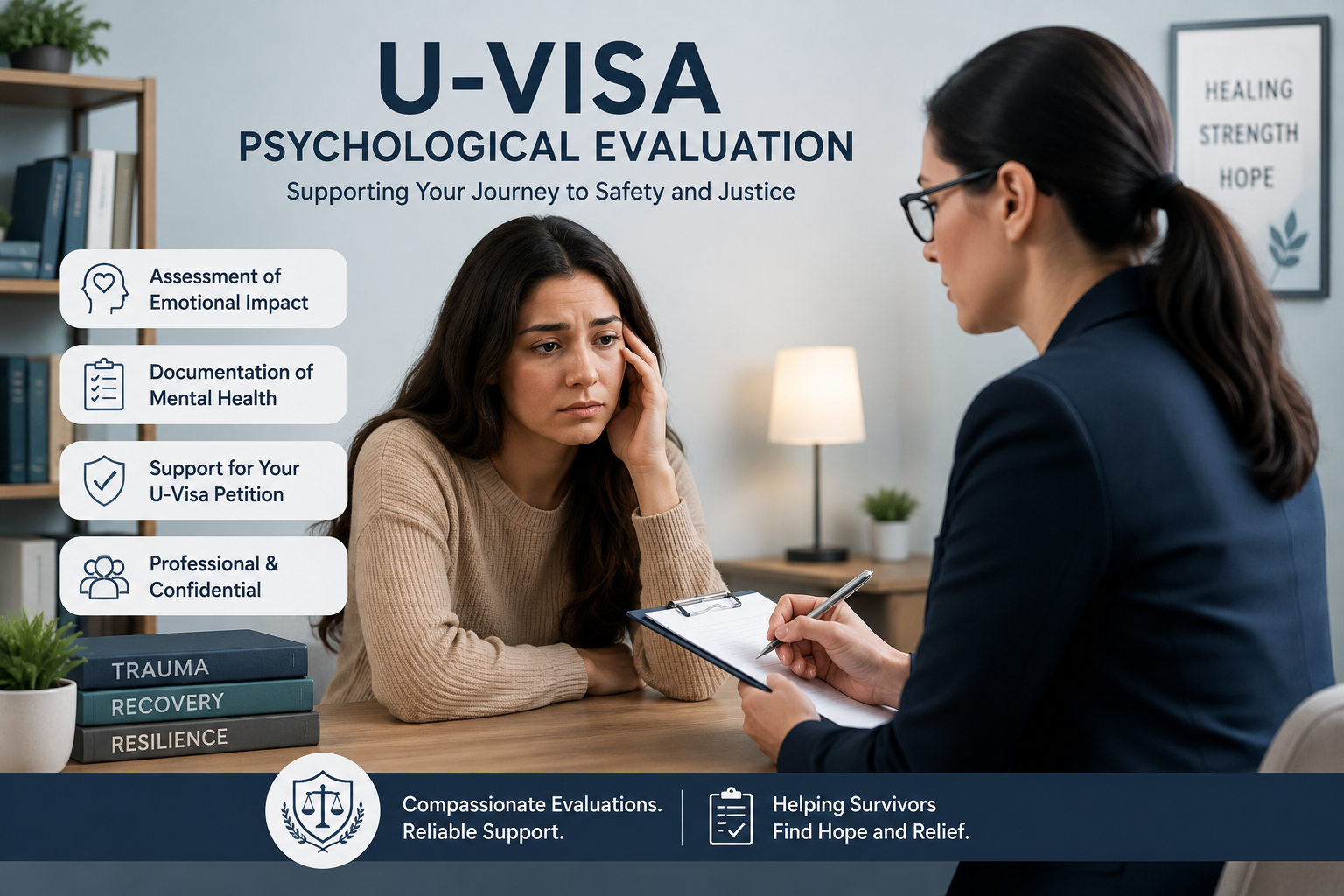
The process usually begins with an interview between the applicant and a licensed mental health professional. The professional may ask questions about the applicant’s background, the qualifying crime, emotional experiences, and current difficulties.
Depending on the circumstances, the evaluation may also involve psychological questionnaires or standardized assessment tools. These tools can help the professional understand the applicant’s emotional functioning and identify symptoms that may require further discussion.
Applicants should answer questions honestly and openly. They do not need to memorize their experiences or use complicated medical language. The purpose of the assessment is to understand their experiences and psychological concerns as accurately as possible. After completing the assessment, the professional prepares a written report based on the information gathered during the evaluation.
What information can the Evaluation include?
A psychological report may contain several important areas, depending on the individual case. These can include the applicant’s relevant personal history, description of the traumatic experience, current symptoms, emotional functioning, and effects on daily activities.
The report may also discuss the relationship between the reported psychological symptoms and the crime. This explanation can be particularly useful when the emotional impact is not immediately visible through physical evidence.
It is important that the evaluation remains professional, objective, and based on the information obtained during the assessment. A strong report should not exaggerate symptoms or make unsupported claims.
Can a U-Visa Evaluation be helpful even without physical injuries?
Yes. Emotional trauma does not always involve visible physical injuries. A person may experience significant psychological distress even when there are no obvious physical signs of harm.
Stress and Anxiety may have impacts on your quality of life. People may also experience sleep disturbance, concentration problems, depression and a decrease in functioning. A psychological evaluation may identify any such concerns in detail and how they relate to your presenting concerns.
This is one reason U Visa psychological evaluation services may be considered as part of an applicant’s supporting documentation when psychological effects are relevant to the case.
How should you prepare for a Psychological Evaluation?
There is usually no need to prepare by memorizing answers. Instead, applicants should bring any relevant information requested by the evaluator and be prepared to discuss their experiences honestly.
It may be beneficial to consider how the crime has impacted various aspects of their life including occupation, social functioning, sleep disturbance, emotional state and their everyday activities. Applicants must also inform the evaluator of any relevant prior psychological condition or trauma.
Perhaps most crucially, candidates should feel no obligation to give a certain response and should be consistent with their symptoms and experience.
Why is Professional Documentation Important?
Immigration cases often involve detailed personal circumstances that can be difficult to explain through a short statement alone. The relevant information about the mental health issues can be presented in a formal document such as a specialist psychological report.
The evaluator’s role is to conduct an independent assessment and provide professional observations based on the evaluation. The report can therefore help communicate psychological information in a way that is easier for legal professionals and immigration authorities to understand. However, a psychological evaluation does not guarantee approval of a U Visa application. Immigration eligibility depends on the requirements of the case and the evidence submitted.
Understanding the Role of the Evaluation in your case
The psychological evaluation may be just another piece of evidence in a complex immigration case. Other evidence may be present that is also relevant, given the facts of the applicant’s case. The psychological evaluation should complement, not substitute for, other documentary evidence or legal advice.
For your U-Visa application you will need to visit with an immigration lawyer to determine what evidence may work best. An experienced mental health professional should evaluate whether a mental assessment is applicable, and to tell you what an assessment will do.
Final Thoughts on U-Visa Psychological Evaluations
A U Visa application can involve more than documenting the crime itself. For some applicants, the emotional and psychological consequences may continue long after the incident. A professional evaluation can provide a clear assessment of these effects and help document experiences that may otherwise be difficult to explain.
If you are preparing an immigration case and believe trauma or emotional distress is relevant to your situation, consider discussing your circumstances with qualified professionals. Properly prepared immigration evaluations can help present important psychological information clearly while keeping the applicant’s individual experiences at the center of the assessment.