
Facing an immigration case can feel overwhelming, especially when you are asked to complete immigration evaluations as part of the process. Whether you are applying for immigration relief or preparing supporting documents for your case, understanding what happens during an evaluation can help reduce uncertainty.
These evaluations serve as professional documentation of how traumatic events, experiences or challenging circumstances may have influenced our emotional and psychological state. If it is for the first time, here is something that you may want to know about being evaluated.
Why are Immigration Evaluations Important?
Immigration evaluations play an important role in many immigration cases. They provide professional insight into a person’s emotional, mental, and psychological experiences when those experiences are relevant to an immigration petition. Attorneys often use these evaluations to support applications by presenting clear and well-documented findings.
These evaluations serve as professional documentation of how traumatic events, experiences or challenging circumstances may have influenced our emotional and psychological state. If it is for the first time, here is something that you may want to know about being evaluated.
This process is conducted with sensitive and professional methods which let you feel safe to talk about whatever comes in your way during your experience.
What happens before your evaluation?
It starts by making an appointment and getting little information from you about what immigration service you require. We might also ask you if you have documents available that we can review in order to facilitate the discussion.
The evaluator will explain to you before the session starts:
- The purpose of the evaluation
- How the information may be used
- Confidentiality policies and limitations
- What topics may be discussed during the interview
What to expect during Immigration Evaluations?
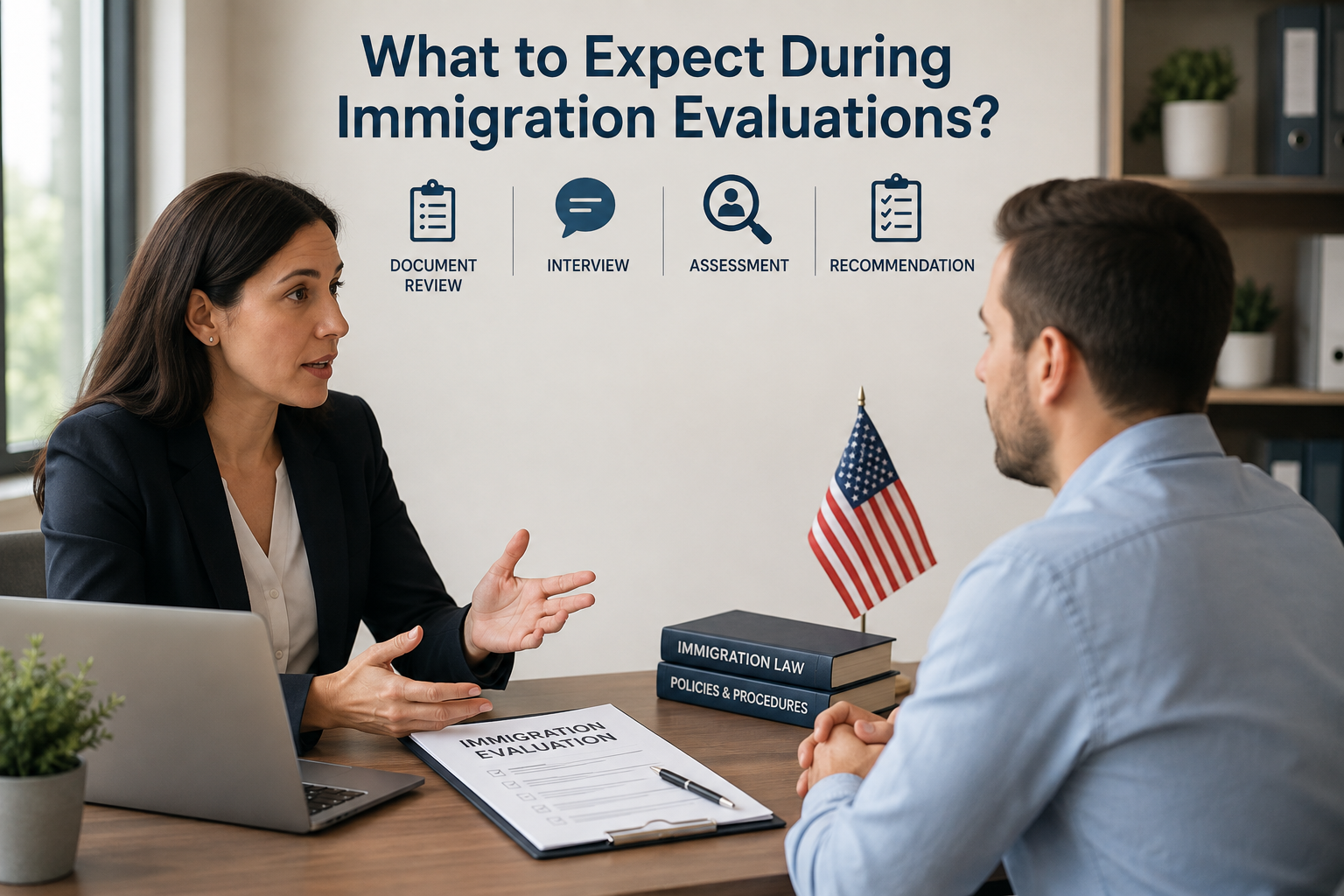
Many people worry about saying the wrong thing or being asked difficult questions. In reality, the goal of the evaluation is to understand your experiences honestly and accurately.
During the interview, you may discuss:
- Your personal and family background
- Educational and employment history
- Medical or psychological history
- Significant life experiences
- Emotional challenges related to your case
- Relationships with family members
- Future concerns and hardships
Some topics may feel emotional or difficult to discuss. Qualified professionals understand this and conduct evaluations with sensitivity and care.
Can an Immigration Court Evaluation be required?
In some immigration matters, an immigration court evaluation might be an important component of a proceeding if psychological findings are central to an evaluation of a claim. Often, judges and attorneys consider expertly conducted evaluations a vital aid in obtaining the full factual and emotional context for someone’s position.
An immigration court evaluation can explain emotional distress, prior traumatic events, and other factors that support the argument being made in a given case. Information contained in the report will necessarily be different from one individual to another, given the variety of experiences or other requirements an immigrant client might have. In connection with other evidence submitted, expert opinion documentation is often useful.
How long does the evaluation take?
It depends on how difficult a case is. Some evaluations take just a few hours, while others might take a couple of visits to properly process all available information.
Factors that can affect the duration include:
- The type of immigration case
- The amount of supporting information provided
- The individual’s personal history
- Whether interpreters or additional interviews are needed
With adequate time, professionals will produce a thorough report reflecting a clients reality.
Tips for preparing for your appointment
You do not need to memorize details or prepare lengthy statements before your appointment. However, a few simple steps may help you feel more comfortable.
Before your evaluation:
- Bring any requested documents
- Be honest and open during the interview
- Take your time when answering questions
- Ask for clarification whenever needed
- Inform the evaluator if discussing certain experiences becomes emotionally difficult
Remember that the purpose of the evaluation is to understand your experiences—not to criticize or challenge them.
Will the Evaluation affect the outcome of your case?
An evaluation is only one part of the overall immigration process. While it may provide valuable supporting evidence, immigration decisions are based on multiple legal and factual considerations.
The role of the evaluator is to provide an objective and professional assessment. Attorneys may use the report alongside other documentation to present a more complete understanding of an individual’s circumstances.
Because every immigration matter is unique, evaluations are prepared carefully to reflect each person’s specific experiences and needs.
Conclusion
Knowing what to expect during an immigration evaluation can make the experience far less intimidating. These assessments are conducted to provide thoughtful, professional documentation that may support individuals navigating complex immigration matters. Being honest, prepared, and informed can help make the process smoother and more comfortable.
If your case involves family separation or significant personal hardship, professional evaluations may become an important part of the supporting evidence. Individuals pursuing immigration relief related to an extreme hardship waiver can benefit from understanding how comprehensive evaluations contribute to presenting their circumstances clearly and effectively.