
It may be challenging to negotiate the immigration process, particularly when decisions are based on proven hardships, emotional health, and personal situations. Immigration evaluations provide crucial information that enables decision-makers to better understand an applicant’s circumstances beyond formal documentation. These professional evaluations provide a thorough picture of social, psychological, and emotional elements affecting a person or family, thus considerably supporting a case.
If you are applying for an immigration benefit or seeking relief from removal, understanding the value of these evaluations can help you prepare a stronger application. You can also learn more about related services through our immigration psychological evaluations page.
Why do Immigration Cases require more than Legal Documents?
Immigration authorities often review extensive documentation, including applications, identification of documents, financial data, and supporting evidence. However, the emotional and psychological effects of separation, trauma, persecution, or family difficulty might not be adequately explained by documentation alone.
A competent evaluation is crucial in this situation. A qualified mental health professional can evaluate an applicant’s experiences and offer unbiased conclusions that aid immigration officials in comprehending the human aspect of a case. When mental distress, trauma, or familial difficulties are a major factor in the application, these evaluations might be very helpful.
What are the Main Benefits of Immigration Evaluations for Applicants?
The potential of immigration evaluations to offer reliable, expert proof to back up an applicant’s claims is one of their greatest benefits. Immigration officers, attorneys, and judges often rely on documented assessments when evaluating complex cases.
Some key benefits include:
Stronger Supporting Evidence
Claims of hardship, trauma, abuse, or psychological distress might be supported by detailed information provided by an examination. Applicants can provide professionally recorded results that are more credible than relying only on personal statements.
Clear Documentation of Mental Health Impacts
Numerous candidates experienced challenging situations, such as violence, persecution, family separation, or major life changes. A thorough evaluation might reveal psychological and emotional impacts that conventional application forms may fail to recognize.
Increased Credibility
Clinical proficiency, and recognized assessment procedures are used in professional evaluations. This strengthens the applicant’s case and guarantees that important incidents are appropriately recorded.
Better Understanding for Decision-Makers
Every day, courts and immigration authorities review a large number of cases. Decision-makers are better able to understand how particular circumstances impact the applicant and their family members with the aid of a well-prepared evaluation.
How does an Immigration Psychological Report strengthen a case?
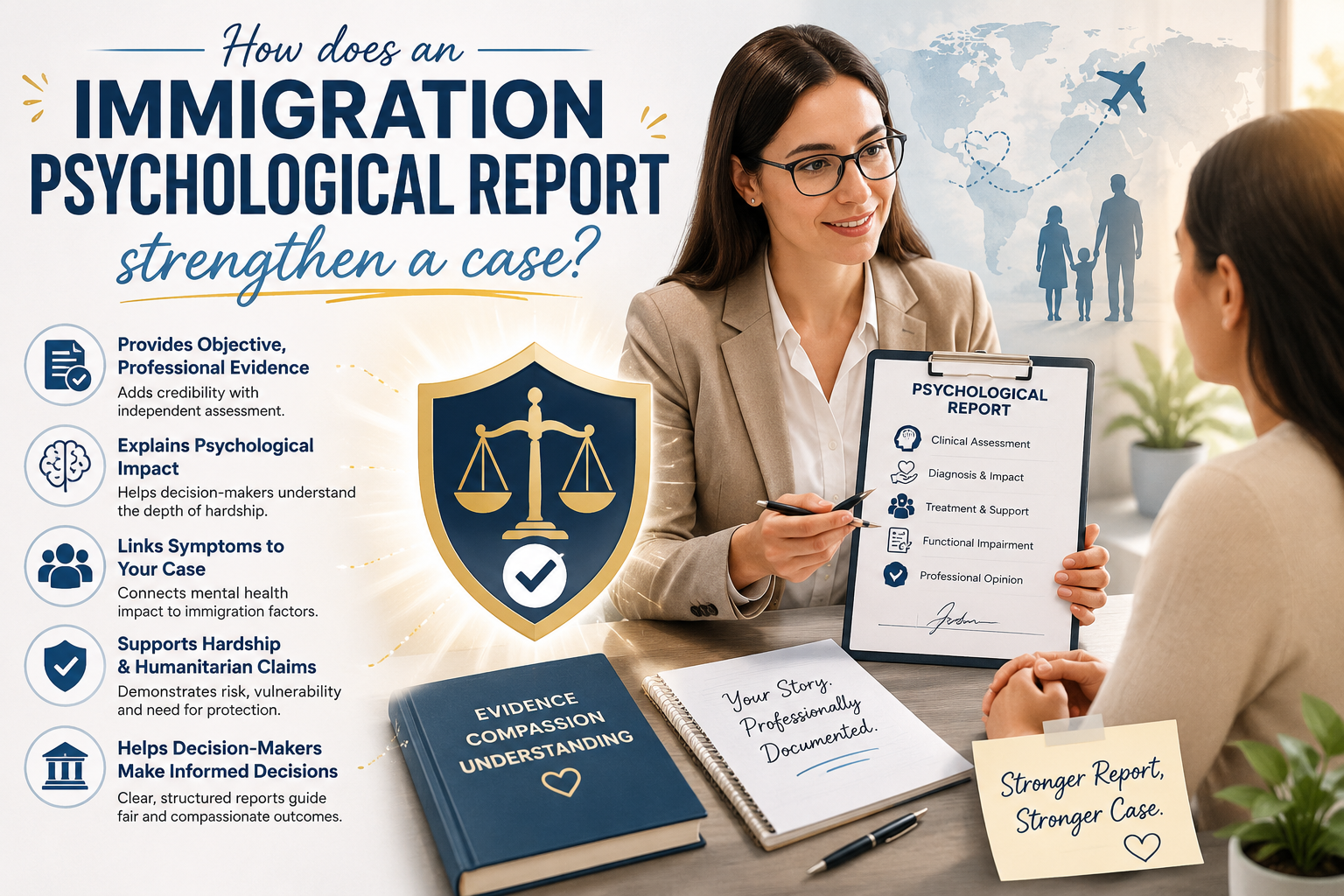
A thorough clinical evaluation of a person’s mental and emotional state may be included in an immigration psychological report. It may record symptoms of anxiety, sadness, trauma, post-traumatic stress disorder, or other emotional difficulties associated with immigration-related situations.
Typically, the report contains:
- Clinical interviews
- Observations about psychology
- Relevant personal background
- Results related to mental health
- Specialist viewpoints and suggestions
Because the report is prepared by a qualified mental health professional, it can serve as an important supporting document in various immigration matters. An accurate and thorough immigration psychological report aids in clarifying the potential effects of immigration decisions on an applicant’s family stability and emotional health.
Supporting Family-Based Immigration Cases
One of the main concerns in many immigration petitions is family unity. There can be serious psychological effects when a family member is removed, denied, or separated for a prolonged period of time.
Evaluations help document:
- Emotional distress caused by separation
- Psychological effects on spouses and children
- Family dependency concerns
- Long-term emotional consequences
Applicants can give a better understanding of how immigration choices may impact the entire family, not just the particular application, by properly presenting these results.
Documenting Trauma and Past Experiences
Many immigrants endure severe hardships before coming to the United States. Some may have experienced abuse, persecution, violence, or hazardous living circumstances back home.
These experiences can be carefully and politely documented through a professional review. Mental health specialists can evaluate how an applicant’s everyday functioning, relationships, and general well-being are still impacted by past trauma.
Helping Attorneys Build Stronger Cases
Immigration attorneys often work closely with evaluators to ensure that all relevant aspects of a client’s situation are properly documented. While attorneys handle legal arguments, evaluators provide specialized insight into psychological and emotional factors.
This collaborative approach can strengthen case preparation by:
- Identifying important psychological concerns
- Providing detailed supporting evidence
- Clarifying complex personal circumstances
- Supporting legal arguments with professional findings
When legal and psychological evidence work together, applicants may be better positioned to present a complete and persuasive case.
Reducing Misunderstandings During the Review Process
Sensitive personal information is sometimes involved in immigration cases. Decision-makers could not completely comprehend the difficulties an applicant has encountered if there is inadequate documentation.
By providing data in an organized, expert manner, evaluations aid in closing this gap. They minimize the possibility of misconceptions or insufficient interpretations by providing clear descriptions of experiences and symptoms. When a candidate finds it difficult to describe traumatic experiences or emotional challenges on their own, this clarity may be really helpful.
The Long-Term Value of Professional Documentation
A professionally prepared evaluation can continue to provide value throughout the immigration process. Whether a case involves interviews, requests for additional evidence, or court proceedings, the evaluation remains a documented record of important findings.
Comprehensive evaluations demonstrate preparation, credibility, and attention to detail. They also provide immigration officials with information that may not be available through other sources of evidence.
Related Resources
You may also find these helpful:
- VAWA Psychological Evaluations
- U Visa Psychological Evaluations
- Extreme Hardship Waiver Evaluations
- T Visa Evaluations
- Asylum Psychological Evaluations
Conclusion
Forms and legal paperwork are not the only things involved in immigration proceedings. By recording emotional, psychological, and family-related difficulties that may impact an applicant’s case, professional assessments aid in telling the whole story. From strengthening evidence to providing greater credibility and clarity, these assessments can play a critical role in the immigration process.
Whether you are seeking relief based on trauma, family hardship, or other immigration-related concerns, obtaining a professional evaluation may provide valuable support for your application. If your case involves an Extreme Hardship Waiver, a comprehensive evaluation can help demonstrate the real-life impact of immigration decisions while supporting a stronger and more complete case. Visit our homepage to learn more about our immigration evaluation services and how we can assist you.