
Every immigration case tells a human story. Behind every petition is a person or family navigating uncertainty, hardship, and decisions that could change their lives forever. In many cases, immigration evaluations are an important part of the legal process.
These evaluations provide a professional assessment of an applicant’s mental and emotional health, helping to show the real impact of their situation. Immigration evaluations help strengthen a legal case by describing the pain, stress, or difficulties a person has faced—things that forms and documents cannot fully explain.
If you’re looking for immigration-related psychological services, you may also find our Extreme Hardship Waiver evaluations resource helpful for understanding how mental health evidence supports waiver requests.
What are Immigration Evaluations and why are they Important?
Immigration evaluations are professional assessments done by a licensed mental health expert. They help document the emotional pain, trauma, or hardship an applicant has been through. A report including the results can be used as evidence in an immigration case.
Although psychological evaluations are not usually necessary in immigration proceedings, they provide strong evidence in situations including mental distress, trauma, abuse, or family separation. A detailed review of relevant documents, clinical exams, and in-depth interviews are all part of these evaluations. The results are then combined into a thorough report that explains in detail how a person’s specific experiences have impacted their psychological and emotional health.
Immigration evaluations come in several types, each designed to address a specific aspect of an individual’s case.
VAWA Evaluations
The Violence Against Women Act (VAWA) provides immigration relief to those who have been abused by a spouse, parent, or child of a U.S. citizen or lawful permanent resident. In these situations, a psychological assessment provides an important proof of abuse’s emotional and psychological effects.
Anxiety, depression, traumatic stress disorder (PTSD), phobia, low self-esteem, and other mental health issues caused by abusive behaviors are all analyzed under VAWA. Mental health professionals carefully record the person’s past, emotional state, and the long-term consequences of the abuse.
The resultant report provides a clinical perspective that aids in illustrating the applicant’s psychological distress and may support a VAWA complaint by offering reliable supporting documentation.
U-Visa Evaluations
People who have been victims of violent crimes frequently suffer long-lasting emotional and psychological traumas that go much deeper than what actually happened. The U-Visa was designed to provide victims of crime who have supported law enforcement in their investigations with legal protection.
A psychological evaluation for a U-Visa case examines closely at the victim’s mental and emotional state as a result of the crime. Such evaluations frequently indicate trauma-related symptoms, including fear, depression, anxiety, and a visible decrease in the ability to do everyday tasks.
By legally recording these consequences in a thorough report, the evaluation provides reliable evidence of the considerable discomfort suffered by the victim, strengthening the application’s entire argument.
Extreme Hardship Waiver Evaluations
Family separation can have adverse impacts on one’s emotions and mental health. For those requesting hardship waivers, proving such consequences is often a critical part in the process. Evaluations of extreme hardship focused on emotional, psychological, and personal difficulties that a qualified member may have in the event that a family member is forced to leave the country or if an immigration benefit is rejected.
Mental health professionals examine factors including family stability, physical issues, emotional suffering, financial dependence, and interruption of schooling. Such documents add to a thorough knowledge of how immigration decisions may affect whole families, not just the applicant.
Asylum Evaluations
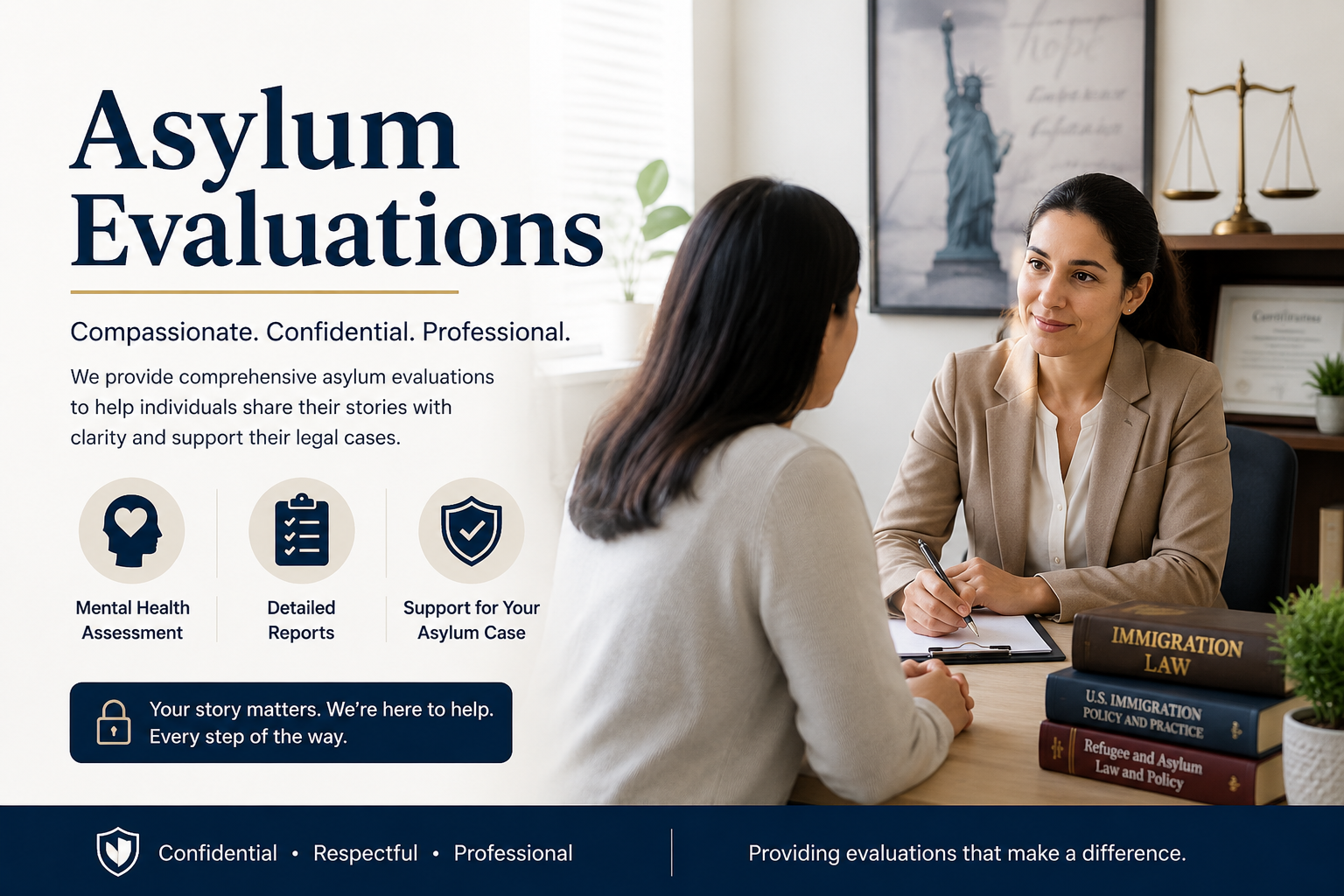
Many asylum seekers have been subjected to violence, threats, political abuse, or other traumatic events back home. Unfortunately, it can be difficult for survivors to clearly and concisely communicate their experiences.
The psychological impacts of these experiences are recorded in an asylum psychological examination, which may also reveal signs of sadness, anxiety, or PTSD. The examination ensures that an applicant’s story is completely understood by offering a clinical viewpoint.
T-Visa Evaluations
Survivors of human trafficking often suffer significant psychological trauma that may persist long after they are rescued from slavery.
T Visa evaluations focus on identifying the psychological effects of being involved with human trafficking. Clinicians examine trauma, fear, emotional distress, relational problems, and long-term mental health disorders throughout the examination. The final report supports the person’s immigration application and clarifies the psychological effects of trafficking.
How can an Immigration Court Evaluation Support your Case?
An Immigration court evaluation may be used when psychological evidence is relevant to a legal proceeding before an immigration judge. Unlike general mental health assessments, these evaluations are specifically prepared with immigration cases in mind.
They offer honest clinical conclusions about trauma, adversity, abuse, persecution, or other psychological aspects related to the case. Judges can have a deeper understanding of the emotional reality behind the legal arguments being made by using an immigration court examination.
What Happens During an Immigration Evaluation?
Although many applicants have anxiety prior to their consultation, the procedure is usually simple and encouraging.
Usually, the evaluation consists of:
- A thorough clinical interview
- Talking about one’s own and family history
- Examining immigration-related situations
- Evaluation of symptoms related to mental health
- When necessary, psychological testing
- Writing a report in a professional manner
The goal of the procedure is to accurately represent the person’s past experiences and present emotional state.
Choosing the Right Evaluation for Your Case
Every immigration case is different. Someone applying for asylum will have different documentation needs than someone seeking a hardship waiver or a U-Visa.
You may make sure that the examination takes into account the particular legal concerns in your case by collaborating with a skilled mental health expert and an experienced immigration lawyer. A well-written report can offer crucial information that supports the petition as a whole.
Conclusion
The immigration process often involves deeply personal experiences that legal documents alone cannot fully explain. Professional immigration evaluations help bridge that gap by providing credible psychological evidence that highlights trauma, hardship, and emotional impact.
Whether someone is seeking asylum, applying for a waiver, or supporting a victim-based petition, the right evaluation can play an important role in presenting a complete case. Professional immigration evaluations help document emotional and psychological challenges, providing valuable evidence that supports the overall immigration process. For individuals pursuing VAWA Immigration cases, a psychological evaluation can provide important supporting documentation and strengthen the evidence presented with their petition.